Walberswick is one of the most sought-after villages on the Suffolk coast, a small settlement of beach huts, black fishermen's sheds and a wide village green set on the south bank of the River Blyth directly opposite Southwold. Around a mile of sand and shingle beach backed by dunes runs along its eastern edge, and the Walberswick National Nature Reserve wraps around the village to the south and west. It is a place people buy into for the landscape, the light and the quiet, and prices reflect that.
What makes Walberswick distinctive is the restraint. There is no supermarket, no through traffic to speak of and very little development. What there is amounts to two well-regarded pubs, a village shop, a church, a village hall, the crabbing bridge over the Blyth and a rowing-boat ferry that has carried people across to Southwold for generations. The village has harboured an artists' colony since the late 19th century, and the combination of open marsh, wide skies and estuary light still draws painters and photographers today.
What is Walberswick known for?
Walberswick is known above all for its landscape and its artists. Since the late 19th century the village has attracted painters drawn to the ruins, the marshes, the river and the open skies, with Philip Wilson Steer and Charles Rennie Mackintosh among the best known. The colony has never really dispersed, and Walberswick Open Studios still opens working studios across the village to visitors each year.
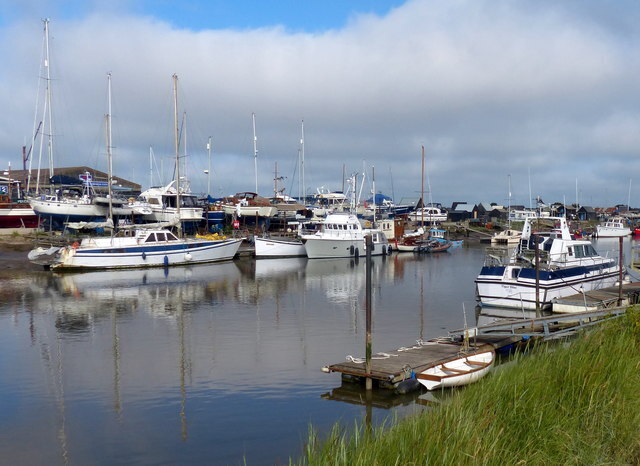
The village was once a substantial working port. In the 15th century Walberswick was a busy centre for fishing and shipbuilding on the Blyth, trading in herring and other catches, and by the early 20th century around 300 boats were landing herring at the local market. Coastal erosion, the silting of the harbour and wider economic change brought the fishing industry into decline after the 1920s, and tourism gradually took its place.
For a generation of visitors, Walberswick meant crabbing. The British Open Crabbing Championship ran annually from 1981, awarding the prize to whoever landed the single heaviest crab within ninety minutes from the village bridge and quay. It was stopped after 2011, having outgrown the village's capacity to host it, though crabbing from the bridge remains one of the defining summer activities here.
Property Market in Walberswick
Walberswick offers a very small and highly sought-after property market. Period cottages and converted fishermen's houses line The Street and Leveretts Lane, larger detached houses sit around the village green, on Ferry Road and along the roads facing the marshes, and a limited number of properties carry direct sea, river or marsh views. There is almost no new development, and the village's position within the Suffolk Coast & Heaths National Landscape and the surrounding National Nature Reserve means that is unlikely to change.
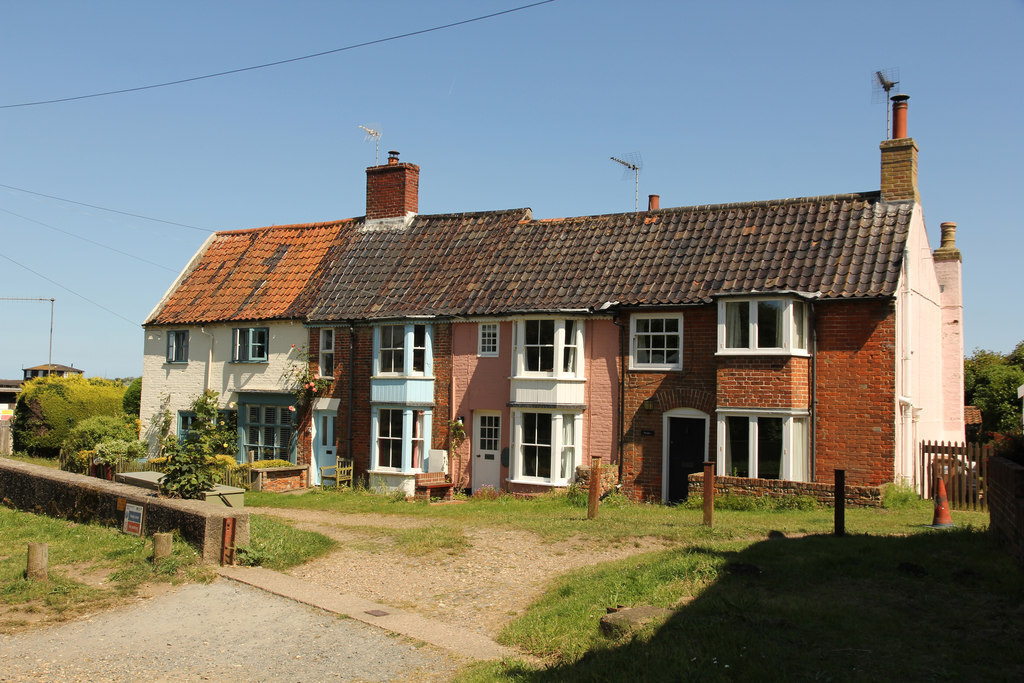
Demand is driven overwhelmingly by second-home buyers and full-time relocators from London and the South East, alongside a smaller number of retirees and established Suffolk families. Stock is extremely limited, sales are infrequent, and the best houses tend to attract strong competition when they do come to market.
Is Walberswick expensive?
Yes. Walberswick is one of the most expensive villages in Suffolk and among the more expensive in the East of England. Rightmove data puts the average property price over the last year at around £1.47 million, with detached houses averaging around £1.6 million and semi-detached properties around £750,000. Other sources using different methodologies report a lower average of around £820,000, and the spread reflects how few properties change hands and how much the mix varies year to year.
That sits far above the wider district context. The ONS reports the average house price in East Suffolk at £278,000 in June 2026, so Walberswick runs at several times the district average. Buyers here are paying for extreme scarcity, an unbroken coastal setting, the protections of the National Landscape and the Nature Reserve, and a village that has changed very little in a century. Recent sold-price data has been volatile, running well up on the previous year, but the very small number of transactions means short-term movements should be read with caution.
Arrange a Property Valuation
Please do get in touch if you are considering selling in the area and one of our experienced agents will be delighted to help. Contact us on 01473 218218
Schools and Education
Walberswick has no school of its own, and families here draw on provision in Southwold, Reydon and the wider Blyth Valley.
Primary Schools
The nearest primaries are Southwold Primary School and Reydon Primary School, both around ten minutes by road around the estuary, or a short ferry crossing and walk in the summer months. Both serve the wider Southwold and Walberswick area and work in partnership with the local secondary provision.
Secondary Schools
There is no state secondary on this stretch of coast. The main local catchment options are Bungay High School, around eighteen miles inland, and Sir John Leman High School at Beccles, a similar distance to the north-west. Both are well-regarded comprehensives on the East Suffolk and South Norfolk border, and school transport is provided.
Independent Schools
Saint Felix School at Reydon, on the edge of Southwold, is the area's main independent option and the closest by some distance. Founded in 1897 and now co-educational, it caters for ages 2 to 18 across nursery, prep, senior and sixth form, with day and boarding places, on a 75-acre campus around ten minutes from Walberswick. Norwich School and Norwich High School for Girls are around fifty minutes north, and Framlingham College around forty-five minutes south.
Further Education
East Coast College at Lowestoft provides further education, T Levels and apprenticeships within around thirty minutes. City College Norwich and the University of East Anglia are around fifty minutes north, and Suffolk New College in Ipswich is within reach for specialist courses.
Getting Around
Walberswick has no railway station. The nearest stations are Halesworth and Darsham, both around nine or ten miles inland on the East Suffolk Line, with regular Greater Anglia services to Ipswich and Lowestoft and onward main-line connections to London Liverpool Street. Darsham station sits directly on the A12, which makes it the easier option for drivers.
Bus services are limited. The 99A connects Southwold with Halesworth station and Bungay, and the Border Bus 524 runs from Southwold to Beccles, Halesworth and Bungay, with the 146 running Southwold to Norwich. Most of these serve Southwold rather than Walberswick itself, so a short drive or the ferry is usually the first leg of any journey by public transport.
The Walberswick to Southwold ferry is a genuine part of the local transport network rather than just an attraction. Operated as a traditional rowing boat on the Suffolk punt design, it carries up to twelve passengers, along with dogs, bicycles, buggies and pushchairs, across the sixty metres of the Blyth in about two minutes, saving a nine-mile road detour. It runs seasonally through the summer and the Easter and half-term holidays, cash only, with adult fares around £2.50 and children aged 5 to 18 around £1.
By road, the A12 lies around four miles west at Blythburgh, providing the direct route south to Ipswich, the M25 and London and north to Lowestoft. Norwich Airport is around thirty-five miles north and London Stansted around ninety miles south-west.
The Beach, the Marshes and the Outdoors
Walberswick's beach runs for around a mile along the eastern edge of the village, sand and shingle backed by grassy dunes, with the black fishermen's sheds and beach huts along the northern end towards the harbour mouth. It is a working, unmanaged beach rather than a resort seafront, and is one of the quieter stretches of the Suffolk coast even in high summer.
The Walberswick National Nature Reserve wraps around the village to the south and west. Designated in 2003 and combined with the reserves at Dingle Marshes and Hen Reedbeds, it covers around 1,340 hectares of heathland, reedbed, grazing marsh, woodland, shingle, lagoon and mudflat, and forms part of the wider Suffolk Coast National Nature Reserve. Marsh harrier, bearded tit, water rail and bittern are all regularly recorded on the waymarked paths.
The walking here is among the best on the Suffolk coast. The Walberswick Explorer, a circular route of around 6.8 miles, runs from the village green out across the marshes to Dunwich and back along the beach. Shorter circuits take in Westwood Marshes and the ruined windpump, and the Suffolk Coast Path runs through the village, linking north across the Bailey Bridge to Southwold and south towards Dunwich, Minsmere and Aldeburgh.
Things to Do in Walberswick
Crabbing from the Bridge
Crabbing from the bridge and quay over the Blyth remains the defining summer activity in the village. Lines and bait are available locally, and although the British Open Crabbing Championship itself ended after 2011, the practice it grew out of carries on daily through the season.
The Southwold Ferry
The rowing-boat ferry across the Blyth is one of the last of its kind on the English coast and has been operated by the same family for generations. The two-minute crossing to Southwold is worth doing for its own sake as well as for the shortcut.
Walberswick National Nature Reserve
The reserve surrounding the village offers waymarked walking across heath, reedbed and marsh, with a strong birdwatching list and the ruined Westwood Marshes windpump as a landmark. Access is free and open all year.
St Andrew's Church
The parish church tells the story of the village's rise and decline in one building. A prosperous port community rebuilt it on a grand scale in 1493, keeping the tower from the earlier church of 1426. By 1695 the village could no longer maintain it, and the roof lead, timber and bells were sold to pay for a far more modest church built inside the old walls, tucked into what had been the south aisle. The ruined nave, chancel and tower still stand around the working church, and the site is one of the most-painted subjects in the village.
Walberswick Open Studios
Held annually, Open Studios opens working artists' studios across the village to the public, continuing a tradition that goes back to the arrival of the first painters here in the late 19th century.
Community Life and Events
Walberswick has a small but active community calendar, run through the village hall, the church and a network of volunteer groups.
Walberswick Open Studios
The annual Open Studios weekend is the village's best-known event, with artists opening their working spaces across Walberswick and visitors able to see work in progress and talk to the makers.
Village Fete and Summer Events
The village fete on the green, alongside a programme of smaller summer events, remains a fixture of the Walberswick year and is run entirely by volunteers.
Southwold and Snape Programmes
Walberswick sits within easy reach of two of the strongest cultural programmes in the region. The Southwold Arts Festival in early May and the wider Latitude Festival at Henham Park in July are both within a short drive, and Snape Maltings and the Aldeburgh Festival are around thirty minutes south.
Dining and Drinking
Walberswick's food and drink offer is small in scale but strong in quality, built around two well-regarded pubs that between them handle most of the village's eating and drinking.
The Anchor
The Anchor is an award-winning inn and restaurant opened by Mark and Sophie Dorber in 2004, and has built a national reputation for its beer and wine lists. It combines a cosy pub with a log fire, a larger restaurant and three outdoor terraces, with eleven rooms including garden chalets. The kitchen works with local produce on a daily specials and a la carte basis, and hand-made pizzas are cooked in a wood-fired oven on the garden terrace through the summer.
The Bell Inn
The Bell Inn sits on the village green a short walk from the dunes, a 600-year-old pub with flagged floors, low beams and open fires. Part of the Adnams family of pubs, it serves the full Adnams range alongside a menu of pub classics, local seafood, seasonal specials and a Sunday roast, with six bedrooms above.
The Village Shop and Beyond
The village shop covers everyday needs and local produce. For a wider choice, Southwold is a two-minute ferry crossing or a short drive away, with The Swan, The Crown, the Sole Bay Inn, Two Magpies Bakery and the harbour fish huts all within easy reach.
Shopping
Walberswick's retail offer is deliberately minimal. The village shop covers everyday grocery needs and local produce, and a small number of galleries and studios sell work directly, particularly around Open Studios.
For anything more, Southwold is the natural destination, reachable by ferry in summer or a short drive year-round. Its High Street carries one of the strongest independent shopping runs in the East of England, including Collen & Clare, the Adnams Cellar & Kitchen, Two Magpies Bakery and a long list of galleries, gift shops and food specialists. Halesworth, nine miles inland, adds a further independent high street, and Norwich provides a full city offer within around fifty minutes.
Golf and Fitness
Southwold Golf Club, on the Common across the estuary, has been in continuous play since 1884 and is one of the older clubs in the county. Its 9-hole layout, played off 18 different tees to make up a 5,972-yard round, runs across natural heathland with sea views and prevailing coastal winds. Halesworth Golf, nine miles inland, offers 27 holes and a driving range, and Aldeburgh Golf Club, one of the leading heathland courses in the country, is around thirty minutes south.
For everyday fitness, the beach, the Suffolk Coast Path and the Nature Reserve paths between them provide some of the best running and walking country on this coast. Saint Felix School at Reydon offers community access to swim and sports facilities at certain times, and Southwold has a small gym and a seasonal open-air swimming option.
Why Walberswick
Walberswick works because of what it has not done. No supermarket, no seafront development, no through traffic and very little new building. What remains is a beach, a village green, two good pubs, a rowing-boat ferry, an artists' colony that has been here for over a century and 1,340 hectares of National Nature Reserve on the doorstep. Southwold is two minutes across the water for anything the village does not carry, and Halesworth and Darsham stations handle the connection to Ipswich and London.
It is a small, expensive and very particular place, and buyers who want it tend to want it specifically. If you are thinking about buying or selling in Walberswick or the surrounding area, our team would be glad to help. Contact us on 01473 218218
The information in this guide was last updated in September 2026.

How can we help?
Book a market appraisal and discover the true potential of your property:

Find Your Local Branch
Speak to people who, quite simply, love their patch and love what they do.


