New homes & developments. Green light for small and grey sites
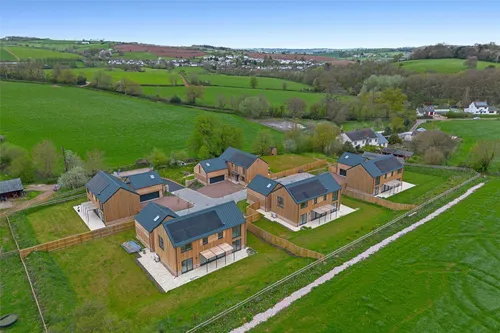
Planning reforms prioritise small sites of fewer than 10 houses.
In August, the government confirmed its latest changes to the National Planning Policy Framework (NPPF), effective immediately. These include a presumption in favour of development within existing settlement boundaries, and of sites within walking distance of a “well connected” train station, and of so−called grey belt sites within Green Belt zones.
Implicitly recognising the less welcome aspects of large, homogenous developments (major housebuilders prefer sites of 100 or more homes) there is a requirement for local authorities to meet a combined total of at least 20% of their housing need via two categories of smaller (up to 2.5 hectare) sites, most of which will involve under 50 dwellings. (When planners talk about housing density, the preferred measure is dwellings per hectare, or dph.) Within those, only sites of under half a hectare, suitable for fewer than ten homes, have so far been given immediate, significant planning advantages. These include exemptions from a host of very costly statutory requirements including: - Affordable housing contributions - Building Safety Levy - Concise planning statement (policy DM1) - 40% built to accessible/adaptable homesstandard M4(2)
In addition, the developers of such a site are entitled to: - Faster statutory determination (a decision in 8 weeks instead of 13) - Slightly lower and more predictable application fee - Officer−delegated decision (not the more uncertain and time−consuming committee referral process)
A high proportion of such sites are also likely to be eligible for the two stage Permission in Principle process. This enables basics such as land use, location and volume to be agreed early and inexpensively, before starting detailed technical work. Again though, this route is available only for sites of under 10 homes. It is hard to overstate the cumulative impact of these exemptions and process simplifications. They will make qualifying sites a high priority for all SME developers and builders whose organisations are suited to that scale.
When is green belt, grey?
The prospect of the development of any Green Belt land caused real concern when this concept was first introduced and over 70% of major residential appeals on grey belt land have since been approved. This is a striking reversal of fortune for sites that would previously have been refused outright.
The revised NPPF provides some comfort here, both in its emphasis on the smallest sites and in a clearer definition of a ‘grey belt’ site. It must be previously developed or other land which, in either case, does not strongly contribute to holding back the sprawl of large built−up areas, or to preventing neighbouring towns from merging into one another, or to preserving the setting and special character of historic towns. Green Belt land which does not qualify as ‘grey’ retains a high level of protection from development. That is, unless it is within walking distance of a “well connected” train station…
What is a "well connected" train station?
This matters a great deal. For qualifying sites (and there are many qualifications) within ten minutes’ walking distance of such a station, there is a presumption in favour of relatively high density development, even in Green Belt areas. However, finding out whether a specific station is “well connected” is not easy − there is no list. Instead, there is a test. Simply stated, this is that such a station sits within a top 80 Travel to Work Area (TTWA) and offers a good, regular service. Mercifully, all local authorities have been given specific tools to work this out. Some have even begun to use them so, if you want to know the status of a particular station, your best bet is probably to contact the relevant planning department.
An opportunity for smaller, high quality developments
These latest NPPF reforms create greater obstacles to the development of land outside established settlement boundaries while making development within them, more likely.
In specifically facilitating the building out of smaller sites with fewer than 10 homes, the reforms aim to give the very SME builders who build among the highest quality products and yet who have struggled to survive, a fighting chance. We hope they succeed. If anyone is actively trying, in the face of high systemic and economic hurdles, to enhance the built environment of our country market towns and villages, it is those small, local firms.