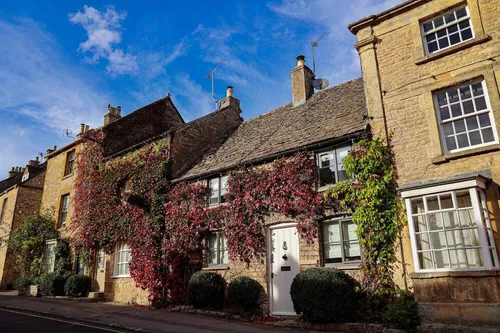
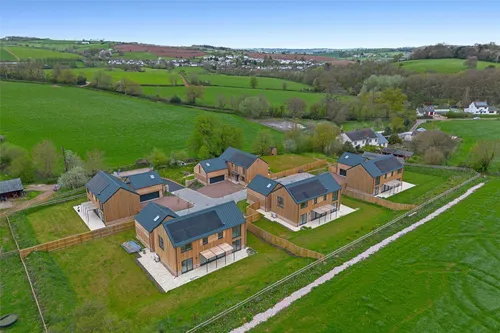
Which period do buyers want their new home to reference?
Scanning the architecture of new home styles offered across the country at the moment, is a little like glancing at a list of most downloaded pop songs: big hits from every past genre and lots of sampling, but no clear style to define the here and now. Why is this, and what do most buyers prefer?
 James Gibbs, who leads our Land & New Homes team in Exeter, argues that demand for radically new styles has grown, encouraging more niche and daring developers to experiment with designs, materials and, especially, green technologies. This explains the great variety on offer today. Meanwhile, even the most cautious builders recognise the broad desire amongst buyers for buildings which both satisfy their mental picture of a ‘proper, solid home’ and look fashionably up-to-date.
Right: Cheshire £3,000,000 guide (Alderley Edge)
Picking up on this, Sarah Walsh, who heads up New Homes for Ipswich, feels strongly that good architecture, like good art and science, does not reject the past, but builds upon its successes. This makes it inevitable, she says, that whichever style is eventually seen to have defined current times, it will be an evolution of earlier ones. “Buyers rarely want straight imitations. They want modern designs which feel good because they are rooted in traditions refined over the last 140 or more years.” Switching back to the musical analogy, this suggests that a song to match the defining house of the present, is unlikely to come from a tribute band. A Taylor Swift cover of Gershwin, though, could be a perfect fit for our era.
More planning officers, but... It is much too early to say whether the new government’s promises on new homes will be met with greater success than those of its predecessor and its commitment to appoint an additional 300 planning officers is welcome. It also, though, underlines how its ambition is limited by a lack of financial room for manoeuvre, given that, according to the Royal Town Planning Institute, the total number of planning officers has not recovered since being reduced by 3,100 between 2010 and 2020.
More new barn conversions Amongst the final changes approved by the previous administration was an extension of permitted development rights in relation to agricultural buildings, doubling the number of homes that can be delivered through such conversions, without planning permission, from five to ten.
Numerous restrictions apply and, in national terms, this change will have little impact on overall numbers: since 2014, the number of such permitted development conversions of agricultural buildings has been fewer than 600 per year. In a tough year for farm businesses though, this could throw a vital lifeline to some.